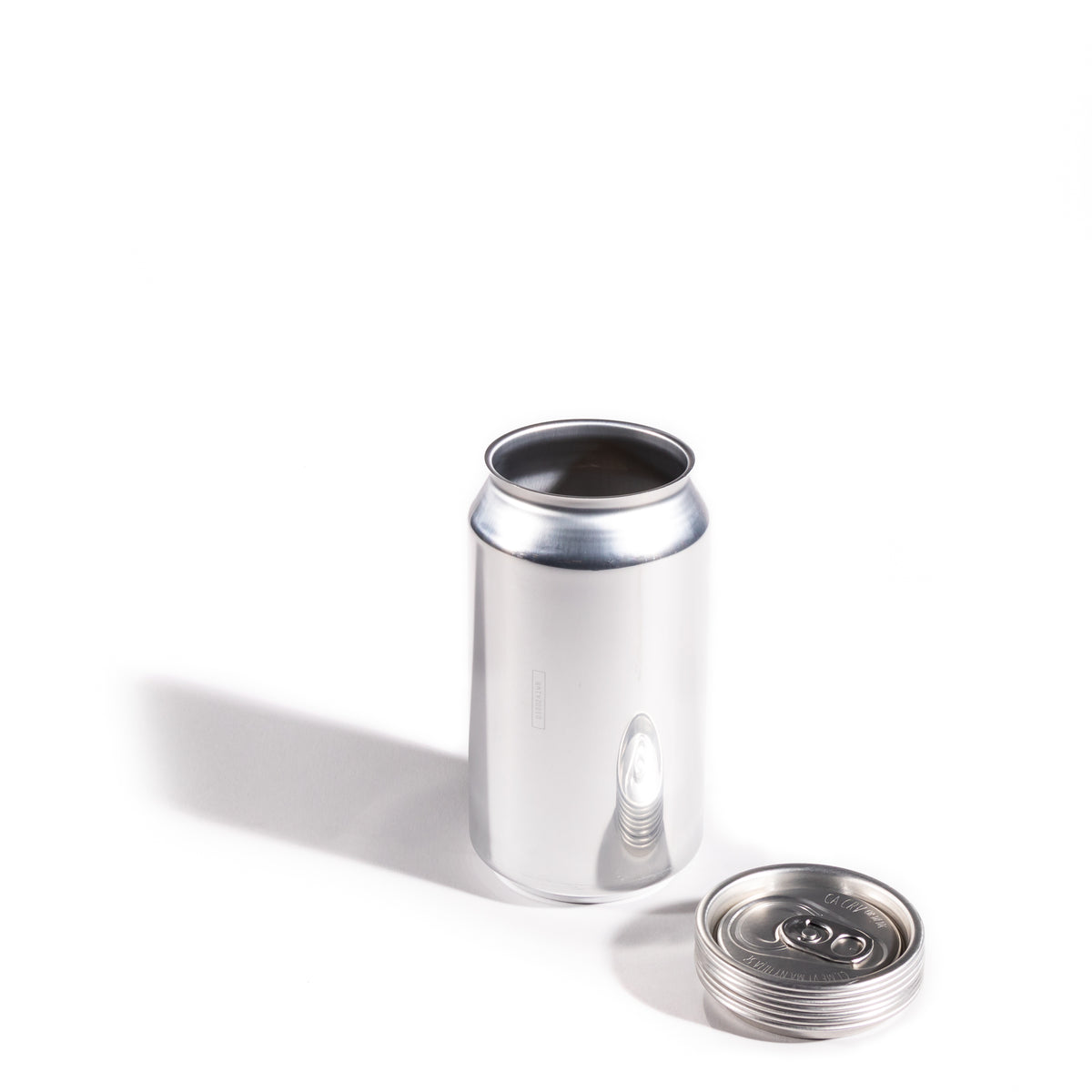
16oz brite aluminum cans provide a larger serving for craft beer, hard seltzer, cold brew, kombucha, ready-to-drink cocktails, and functional beverages. Their tall profile offers generous space for your label design. These unprinted cans are ready for your own branding, or you can choose Oktober’s custom pre-labeled version to have labels applied before shipment. This full-pallet quantity supports larger production runs.
KEY FEATURES
Quantity: 5,446 unlabeled cans per full pallet. Each quantity of 1 added to your cart is one full pallet.
Can Format: 16oz (473ml) Standard. Unprinted brite aluminum, supplied without labels.
End Options: Choose Standard 202 B64, Full-Aperture 202 B64, or 360End®. Select No Ends if you are supplying your own.
Seamer Setup: Use a beverage-can seamer configured for this can’s diameter, height, and selected end profile.
Beverage Use: Suitable for carbonated beverages and properly processed still drinks.
Thermal Processing: Liner heat resistance alone does not make the finished can-and-end package retort-approved. Confirm the complete package and processing requirements with your process authority before retort, hot-fill, pasteurization, or other thermal processing.
Lead Time: Typically ships within 7 business days. Transit time is additional and depends on the freight service and destination.
Packaging: Palletized cans are wrapped and secured with straps and corner protection. If ends are selected, they are packaged on top of the pallet.
Pallet Specifications: 56 × 44 × 96 inches; approximate shipment weight 285 lb; 14 layers with 389 cans per layer. Dimensions and weights are listed for shipments with ends where specified.
Freight Delivery: Ships by LTL freight. Provide a complete delivery address, a contact name and phone number, and any residential, limited-access, or liftgate requirements. If you do not have a forklift or loading dock, request liftgate service. Additional freight charges must be paid before shipment.
Delivery Inspection: Inspect the shipment when it arrives and note damage on the carrier’s delivery record. Keep the product and packaging, photograph the damage, and notify info@oktoberdesign.com within 24 hours. Report shortages within 3 business days. Review the LTL Freight Policy.
Returns: Cans, ends, and caps are not eligible for return. See the Shipping & Returns Policy for details, including transit damage and claim requirements.
Questions: Email info@oktoberdesign.com before ordering if you need help with can size, ends, adapters, or delivery.
SUSTAINABILITY BENEFITS
Recyclable Aluminum: Aluminum can be recycled repeatedly without losing its material properties, helping keep valuable metal in use. Recycle cans where accepted, and follow your local program’s instructions for labels and ends.
Energy Savings Through Recycling: Producing recycled aluminum uses approximately 95% less energy than producing new aluminum from raw materials. Recycling your empty cans helps make those energy savings possible.
Can-to-Can Recycling: A 2025 industry commissioned study found that recycled aluminum beverage cans become new cans in less than 60 days on average in the U.S. Nearly 97% of recycled aluminum beverage can material goes back into new cans.
Established Use of Recycled Material: Aluminum beverage cans contain 71% recycled content on average, according to a 2024 U.S. industry report. Recycled content varies by manufacturer and product.
Lightweight, Efficient Packaging: Aluminum cans are lightweight, stackable, and resistant to shattering, making them practical for storage and transportation. The average aluminum beverage can weighs 38% less than it did in the 1970s, reducing the material needed per can.